
is an artisanal chocolate brand concept celebrating cacao’s sacred origins and the cultures that cultivate it.
The name Food of the Gods comes from the Latin botanical name for the cacao tree, Theobroma cacao, literally “food of the gods.”
The brand’s core purpose is to create premium chocolate bars in partnership with producers in cacao-growing regions around the world.
Every bar tells a story, blending flavor, art, and heritage into a single, delectable experience.
For this project, I developed a complete brand identity system from the ground up, including:




* This brand book may be better viewed on larger screens
I selected three cacao-producing regions to inspire the flavors and designs of the Food of the Gods chocolate bars. Each region has a rich history and distinctive traditions rooted in cacao cultivation. During my research, I explored not only their cultural connections to cacao but also the native plants, animals, and ingredients that shape their identity. These discoveries inspired packaging that celebrates the unique wildlife and biodiversity of each origin.
Cacao is native to the Amazon basin, where Indigenous peoples first cultivated and consumed it thousands of years ago, often as a bitter, energizing drink blended with local spices and fruits. The Amazon remains a cradle of cacao biodiversity, home to rare varieties that preserve the plant’s genetic heritage.


In ancient Mesoamerica, particularly among the Maya and Aztec, cacao was considered a sacred gift from the gods, used in rituals, as currency, and as a drink reserved for nobility and warriors. Mexico’s enduring cacao traditions still influence modern chocolate making, from spiced cacao drinks to ceremonial uses.
In ancient Mesoamerica, particularly among the Maya and Aztec, cacao was considered a sacred gift from the gods, used in rituals, as currency, and as a drink reserved for nobility and warriors. Mexico’s enduring cacao traditions still influence modern chocolate making, from spiced cacao drinks to ceremonial uses.
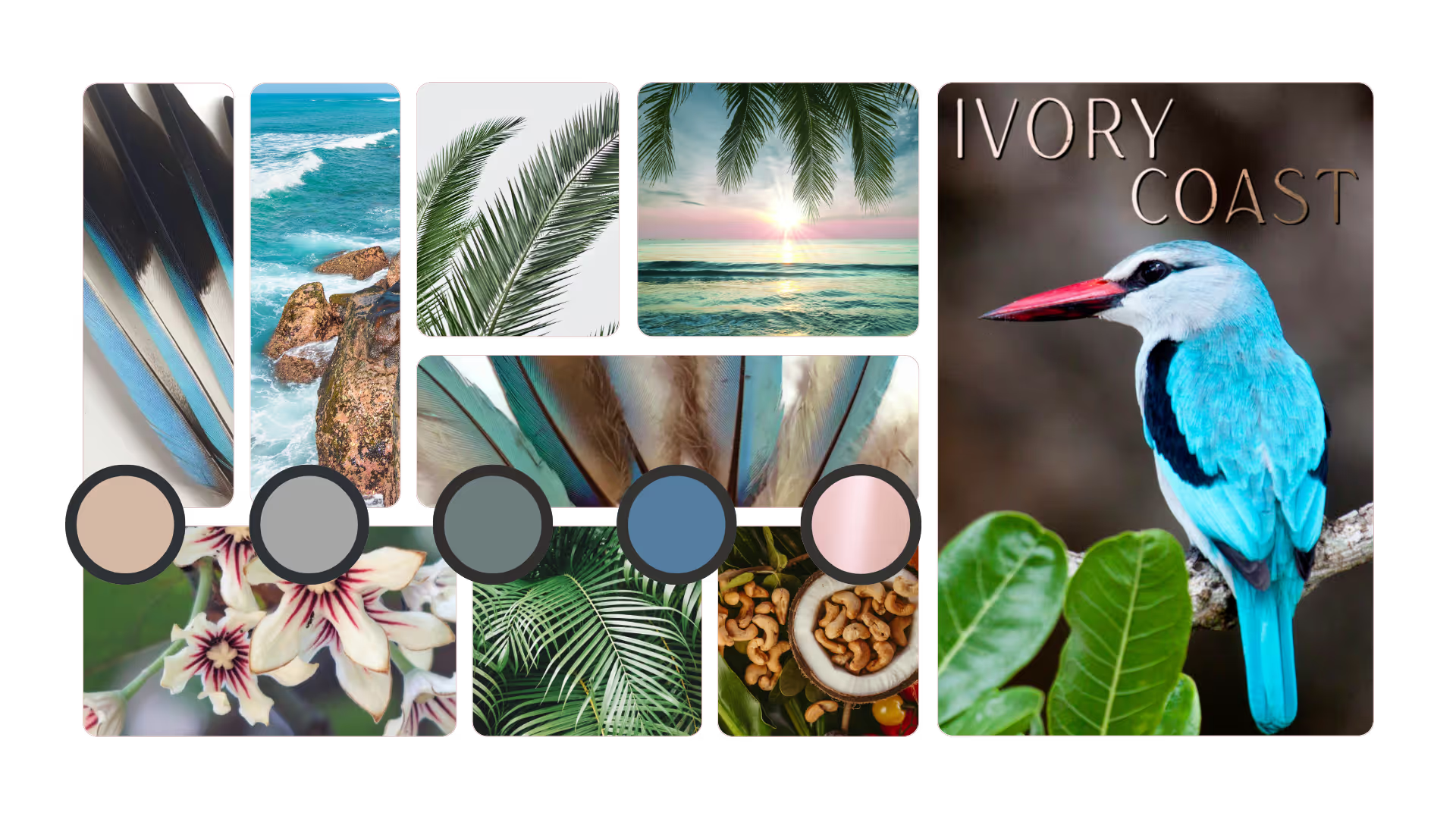

I created illustrated artwork for each chocolate bar package in Adobe Illustrator, featuring plants, animals, and ingredients that represented each region. Over time, I refined the concept to focus solely on local bird species, allowing me to streamline the design process while still capturing the unique biodiversity and character of each origin.

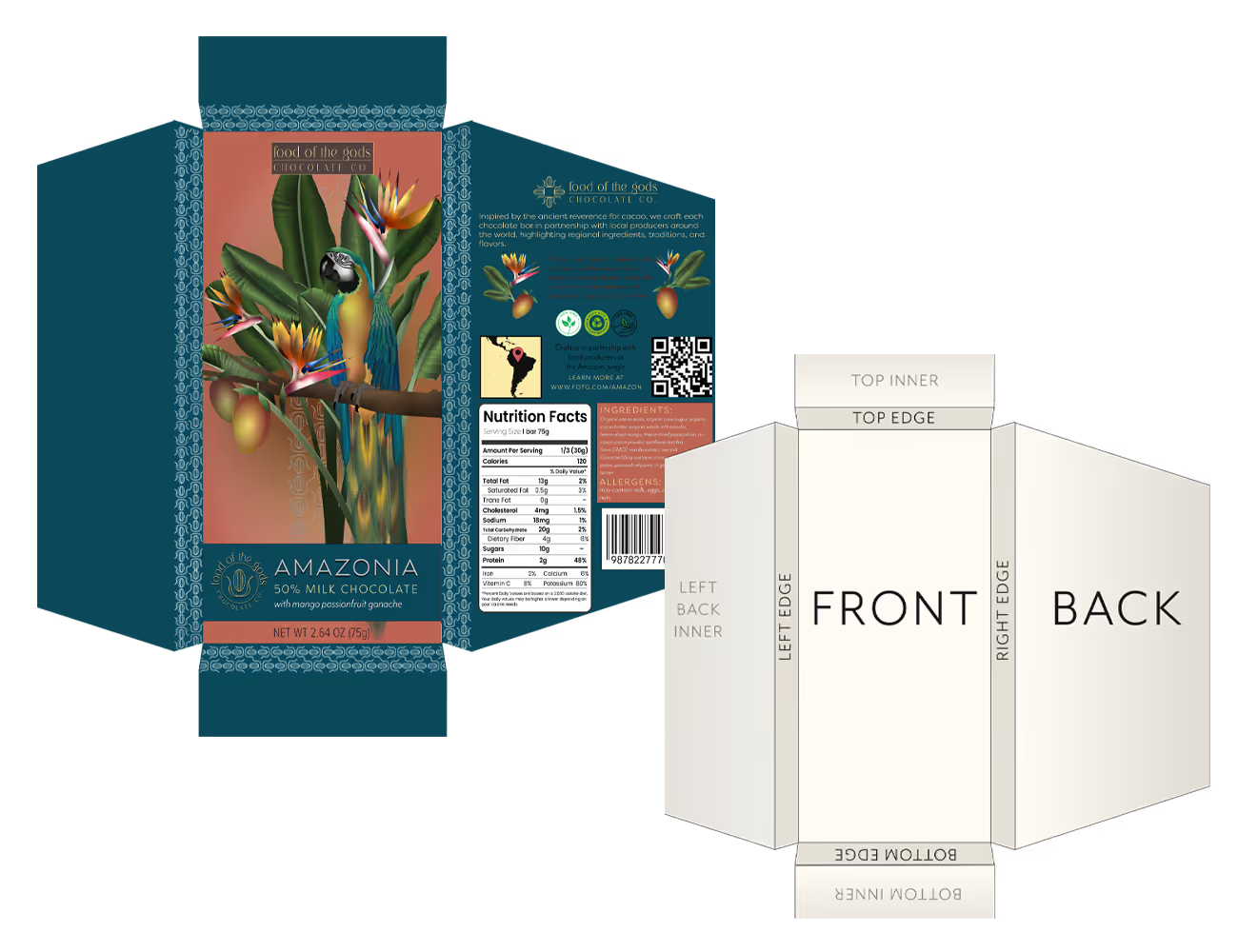
To achieve the look of a realistically folded chocolate bar wrapper, I first created a flat, unfolded packaging layout in Adobe Photoshop. This served as a precise guideline for placing each design element within its correct position on the final folded wrapper. The layout included clearly marked panels — front, back, edges, and inner flaps — as well as safe zones to ensure no important details would be lost in the folds or seams. By working from this structured template, I could consistently adapt each chocolate bar design while maintaining accuracy and alignment, resulting in realistic, 3D mockups that faithfully represented how the product would appear in physical form.
Seperate from this template, I created a layout for elements that woild be appear as a metallic foil, including, the chocolate bar's name and the brand's logo.
Once the front cover illustrations were complete, I researched and developed the additional label assets needed for the packaging. This included:
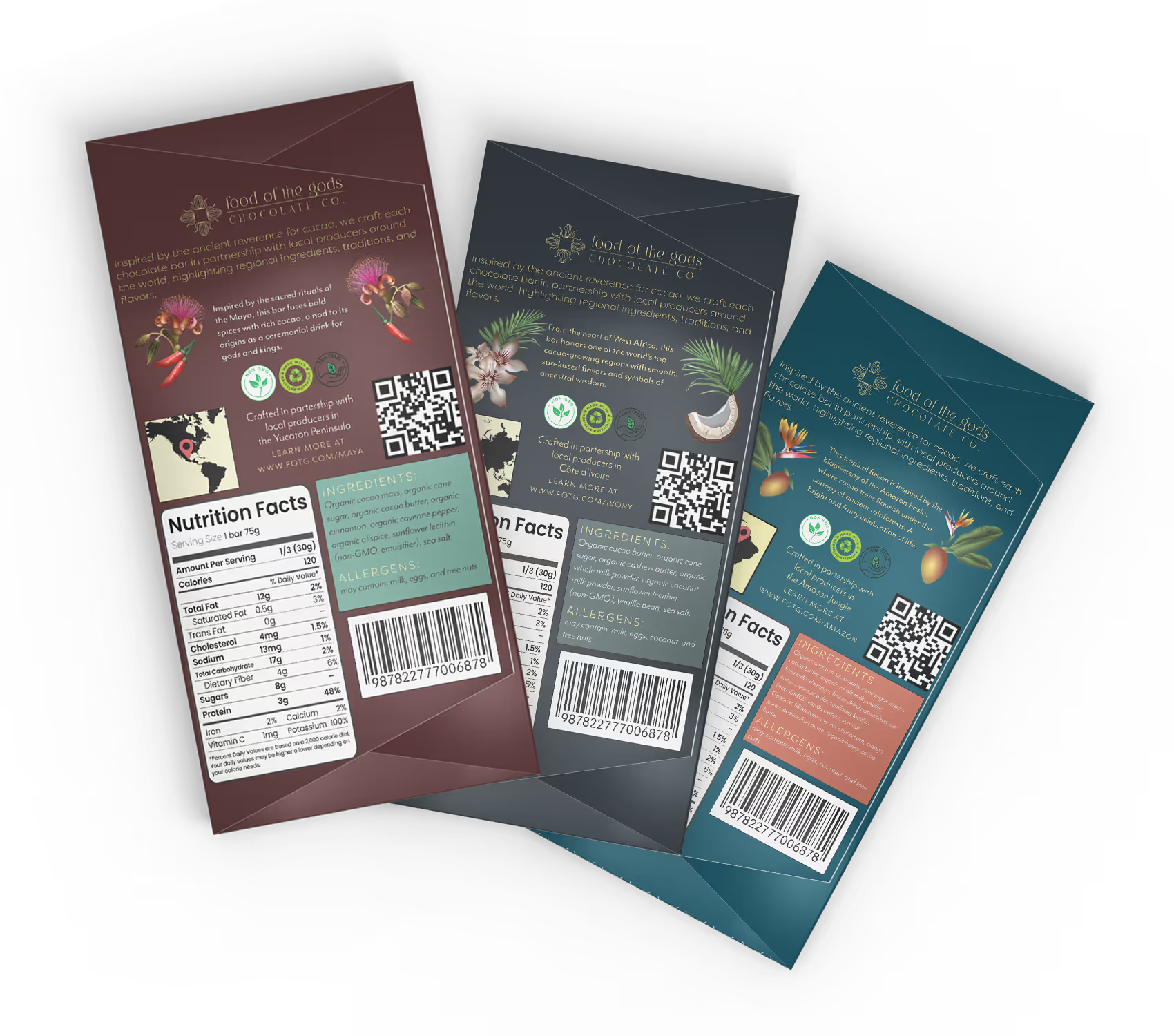
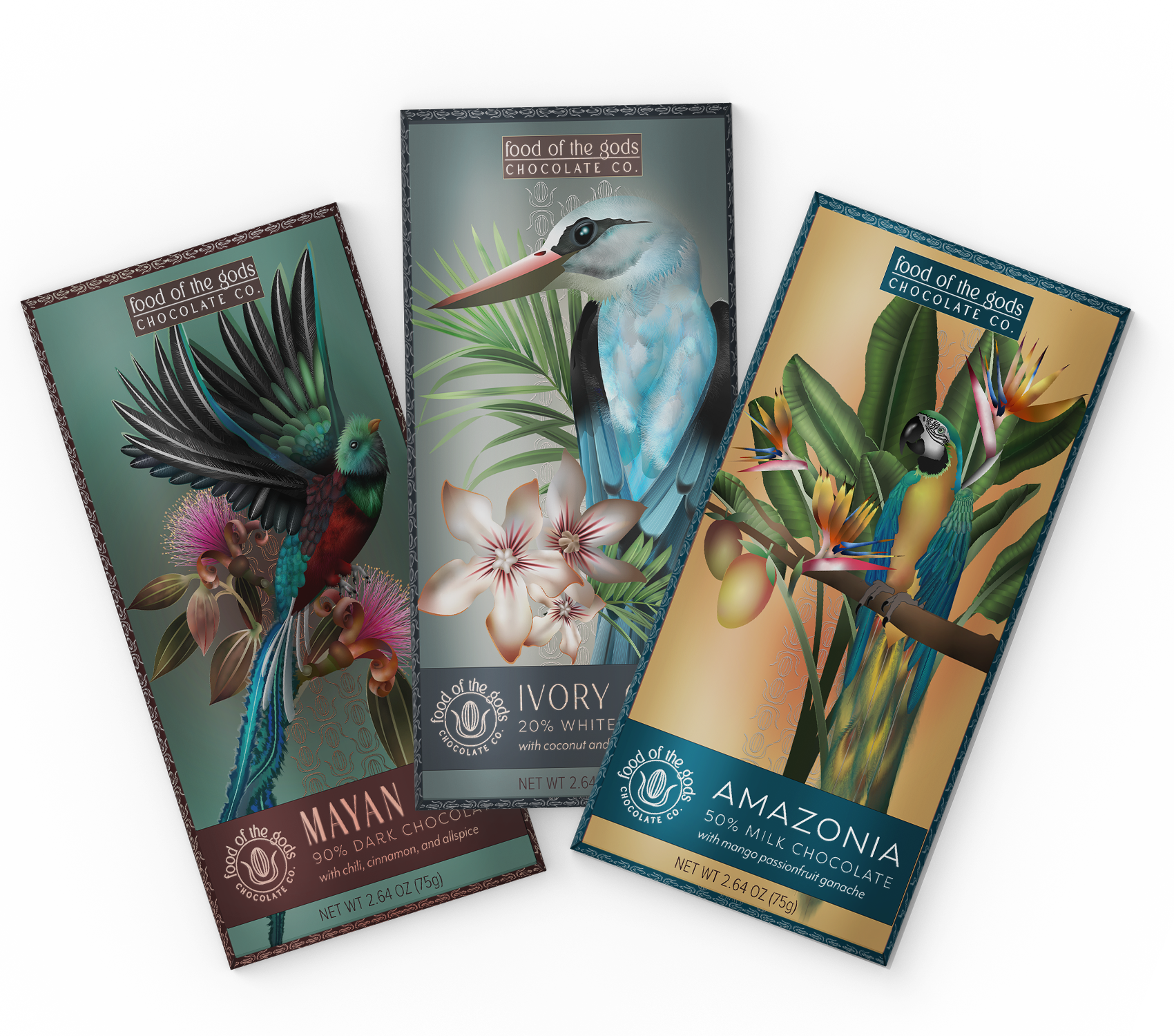
The final mockups were created in Adobe Dimension and edited in Adobe Photoshop with Adobe Firefly generated scenery displaying each product's unique flavours and ingredients.


